
Most Recent
Musk companies take key step closer to mega merger
Elon Musk's two public companies have appointed five directors, three from Tesla and two from SpaceX, to guide two special committees handling merger negotiations, the Financial Times reported on Tuesday. The directors are Roelof Botha and Randy Glein from SpaceX and Robyn Denholm, Kathleen Wilson-Thompson and Jack Hartung from Tesla, the report said, citing people familiar with the matter. Musk said on SpaceX's third-quarter earnings call last month that a merger unifying his AI, robotics, EV and aerospace ambitions under a single corporate roof would be "a good idea". He confirmed the companies had formed special committees of independent directors to discuss a union. The special committees have hired advisers who are fine-tuning financial models that will form the basis for their negotiating positions in an all-stock merger, including Morgan Stanley and Goldman Sachs for SpaceX and Evercore for Tesla, the report said. The bankers are studying which parts of the proposed conglomerate overlap, even as a potential combination faces steep regulatory hurdles over SpaceX's US defence contracts and Tesla's reliance on China. Bloomberg reported earlier this month that a deal could be announced as early as December, citing progress in merger negotiations. (Reuters) Edited by Tony Sabine
Huawei passes 100m mark in HarmonyOS takeup
Huawei on Tuesday announced that the number of smartphones, tablets and computers running its self-developed HarmonyOS operating system has exceeded 100 million, marking a major milestone in the company's efforts to build an independent software ecosystem. The figure covers devices running HarmonyOS 5, 6 and 7. The HarmonyOS operating system now offers more than 460,000 applications and services, with over 12 million registered developers, it said. Huawei introduced a new HarmonyOS architecture in October 2024, with the launch of HarmonyOS 5, followed by subsequent updates, versions 6 and 7. The architecture is independent of Google's Android and Apple's iOS, featuring its own operating kernel, programming language and AI framework, all developed without using the Linux kernel or Android open-source code. Operating systems are the foundation of the digital ecosystem, while the number of devices running them is a key factor determining whether an ecosystem can achieve sufficient scale to take root and sustain itself. It took about 25 months for the self-developed HarmonyOS to grow from commercial launch to surpassing the 100-million-devices milestone. Huawei said HarmonyOS applications now cover a wide range of areas, including local services, e-commerce retail, office work, travel and video games. New applications combining innovative technology with real-world use cases have emerged, from high-definition livestreaming with telephoto macro photography to accessibility tools for people with language barriers. More than 14,000 contributors are developing industry-specific innovations on the open-source OpenHarmony operating system, producing over 120 customised versions for sectors such as power, water management and manufacturing. Xia Yubin, director of the OpenHarmony technology club at Shanghai Jiao Tong University, said operating systems have long been dominated by a few foreign companies, and HarmonyOS' surpassing of the 100-million mark means China's foundational software has blazed a path for independent development that can be replicated. More devices and more diverse scenarios lead to a more mature ecosystem, which in turn encourages more companies to invest in underlying technological innovation. Huawei has continued to prioritise research and development. In the first half of 2026, its R&D spending reached a same-period record high of 121.38 billion yuan, up 25.2 percent year on year, according to its semi-annual report, with R&D accounting for 25.94 percent of total revenue. (Xinhua) Edited by Tony Sabine

How East African Hospitality Is Setting Global Luxury Standards Without Selling Out
East Africa has long been recognized for its remarkable landscapes, wildlife and cultural diversity. Over time, it has also attracted attention for its luxury hospitality offering. From Nairobi’s urban retreats to exclusive safari lodges and boutique properties, the region is developing experiences that appeal to travellers seeking more than just a place to stay. The expectations of luxury travellers are evolving. While comfort, quality and personalized service remain important, guests are increasingly interested in experiences that connect them to the destinations they visit. Local culture, distinctive design, regional cuisine and a genuine sense of place are becoming important parts of the hospitality experience.

Diriyah Company Completes Wadi Safar Golf and Country Club
Diriyah Company today announced the completion of Wadi Safar Golf and Country Club, a private members’ club set within the striking natural landscape of Wadi Safar. Operated by Golf Saudi, the Club brings together championship golf, refined hospitality, wellness and recreation in a setting shaped by the character and heritage of Diriyah. This milestone follows Diriyah Company’s earlier announcement of the completion of the golf course and marks an important step in the continued development of Wadi Safar. As master developer, Diriyah Company delivered the Club with nearly 2,000 personnel mobilized at peak construction.

BALEARIC ISLANDS LAUNCHES NEW RESPONSIBLE TOURISM TRAINING COURSE FOR UK TRAVEL TRADE
The Agency for Tourism Strategy of the Balearic Islands (AETIB) has launched a new trade training course designed to enhance UK travel agents’ understanding of Mallorca, Menorca, Ibiza and Formentera, fostering responsible tourism practice and visitor awareness. Available through the Equator Global platform, the Balearic Islands Sustainable Islands Training Course provides travel trade professionals with an in-depth perspective on the archipelago’s tourism strategy, individual island identities, and the collective commitment towards a balanced and sustainable visitor economy.

Anguilla extends record tourism streak with strongest July on record
Anguilla’s tourism industry continued its record-breaking performance in July, welcoming 12,553 stayover visitors, a 24.5% increase over the same month last year and the highest July total on record. According to the Anguilla Statistics Department, the latest results mark the seventh consecutive month in which the island has established a new monthly stayover record, extending the momentum that produced its strongest first half ever.

Stocks Surge After Jensen Huang Is Reinstated as Nvidia CEO
The market had already started to bounce back from a sell-off last week. Then, the news that Nvidia reinstated its former chief executive sent shares soaring.
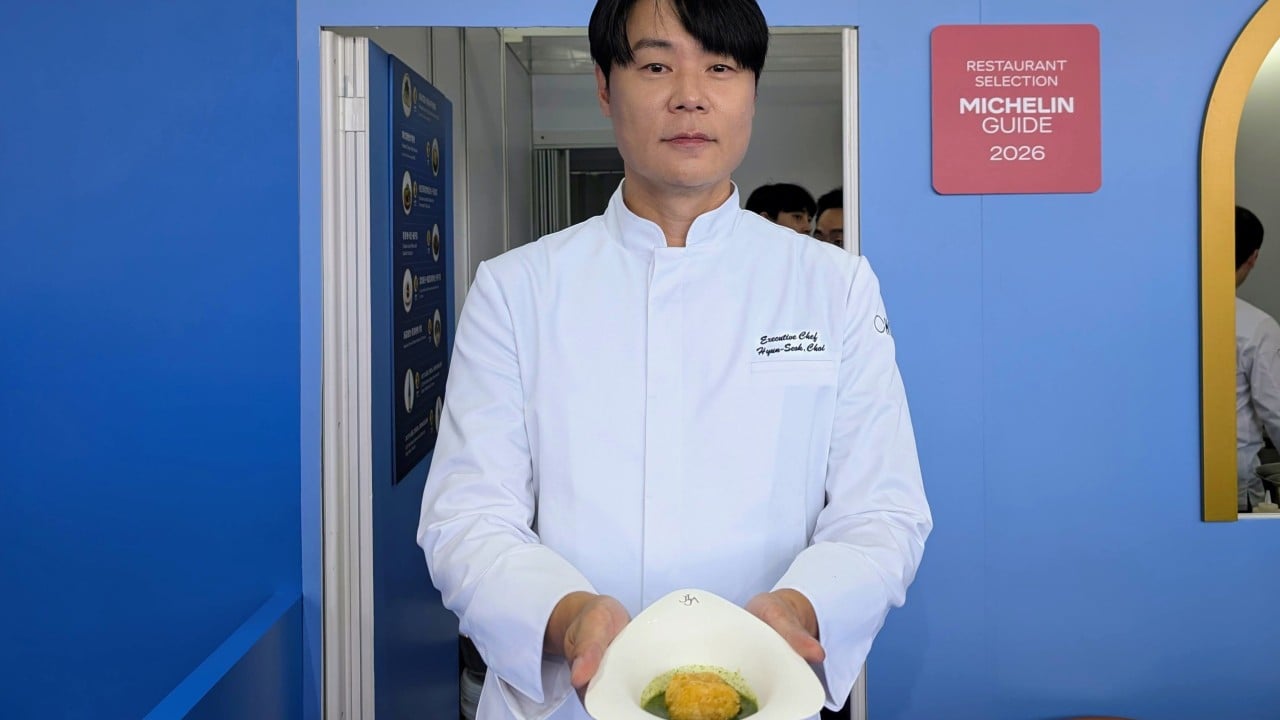
Culinary Class Wars chef Choi Hyun-seok on his cooking philosophy and love for Hong Kong
During his time on Netflix’s Culinary Class Wars, Choi Hyun-seok proved a chef’s strategic prowess can be as memorable as their cooking. A member of the “White Spoon” team, he reached the first season’s final eight with inventive combinations such as mapo tofu risotto with lamb, and by ruthlessly hindering a rival team. Choi returned for season two of the series as a special guest judge rather than a contestant. He was recently in Hong Kong for the Wine & Dine Festival 2026. The festival...

Hotel Review: Amansara, Siem Reap – Timeless Royal Glamour
A storied and elegant retreat in Cambodia's cultural heart The post Hotel Review: Amansara, Siem Reap – Timeless Royal Glamour appeared first on Business Traveller.

Non-Americans Are Sharing Photos That Prove How Different Their Countries Are From The US, And These 55 Pictures Are Shocking
This is not the stuff you find in a textbook at school. View Entire Post ›